

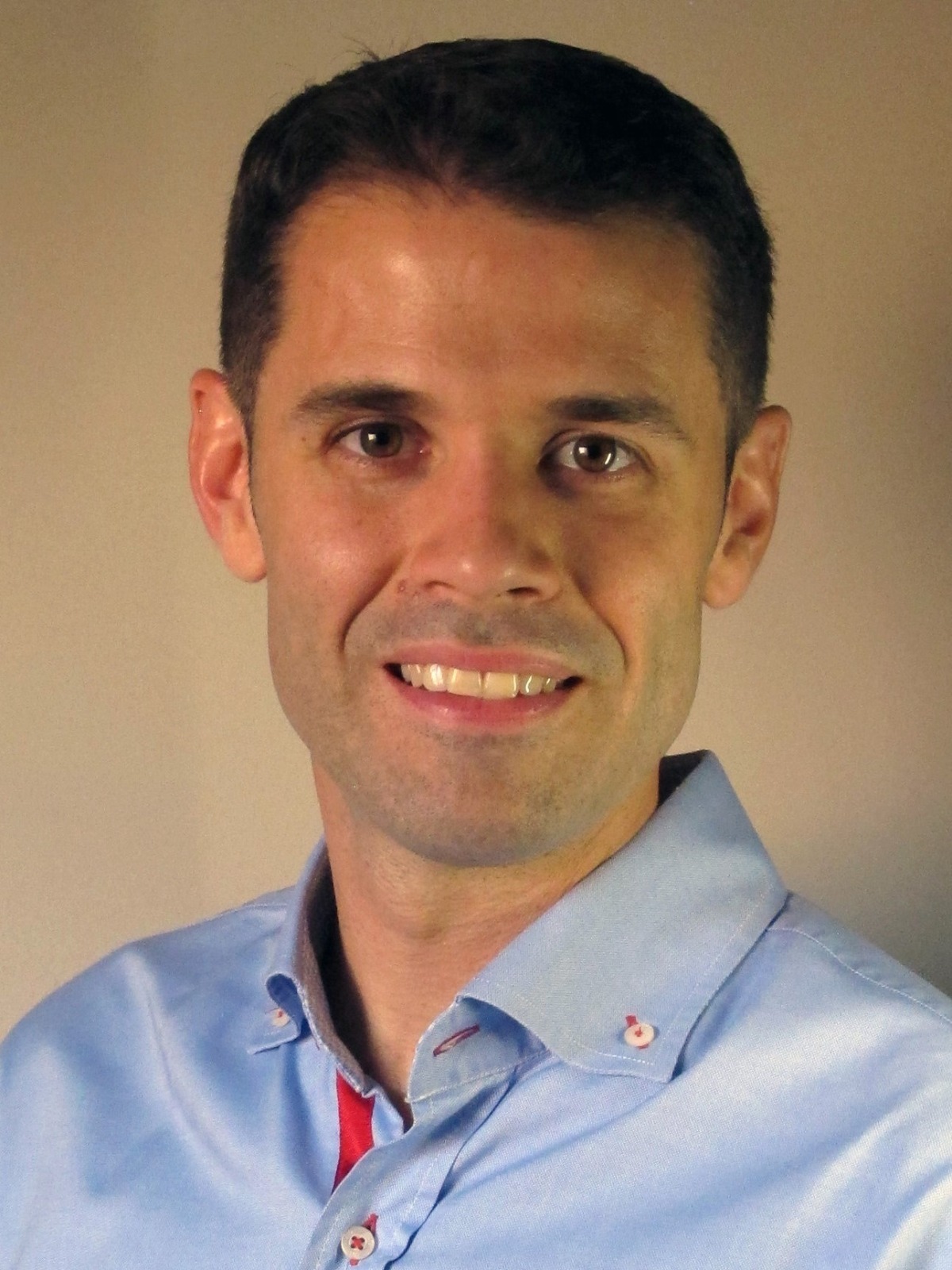
“Structuring ultrafast laser pulses for their application in attosecond science”
Carlos Hernández-García
University of Salamanca
Ultrafast laser technology has transformed our understanding of science, enabling the observation and control of matter on femtosecond (10⁻¹⁵ s) and attosecond (10⁻¹⁸ s) timescales. The generation of attosecond pulses through high harmonic generation (HHG)—recognized with the 2023 Nobel Prize in Physics—has established a foundation for attosecond science as a transformative field impacting applied —photonics, nanotechnology, spectroscopy, imaging— and fundamental—physics, chemistry, biology— fields. A pivotal development in attosecond science is the capability of structuring ultrafast laser sources, particularly in their spin and orbital angular momentum properties. These advances enable time-dependent studies of chiral systems, magnetic materials, and ultrafast electronic and spin dynamics with unprecedented precision. The ability to generate structured attosecond pulses via HHG has driven several breakthroughs in nonlinear optics, allowing the creation of EUV/soft x-ray pulses with tailored angular momentum and spatiotemporal profiles. In this talk we will review several works that have boosted the field of attosecond structured pulses during the last decade. We will focus not only in the ability to tailor the angular momentum properties of attosecond pulses, but also on how through the topology of the EUV/soft x-ray pulses we can retrieve information about ultrafast electronic dynamics of matter. Since the early work on HHG driven by vortex beams, the use of driving field configurations with custom orbital angular momentum properties has opened opportunities for controlling spatiotemporal high-order harmonic properties. Notable advancements include the generation of attosecond vortices with controlled polarization, high harmonic pulses with time-dependent orbital angular momentum or self-torque, EUV vector harmonic pulses, attosecond vortex pulse trains, spatially-structured harmonic beams from graphene, or EUV spatiotemporal and spatiospectral optical vortices.
Carlos Hernández is an associate professor at Universidad de Salamanca (Spain). PhD in Physics (2013). After a European Marie Sklodowska Curie postdoctoral stay at JILA, University of Colorado at Boulder (USA), he returned to Universidad de Salamanca where he leads the Unit on Structured Light and Matter (LUMES) and the ERC Starting Grant project ATTOSTRUCTURA. His work focuses on the generation and applications of structured laser pulses, with durations in the attosecond timescale. Together with his colleagues and collaborators, he has designed theoretical tools to understand and combine quantum simulations with highly non-linear strong-field processes. Co-author of >80 peer-reviewed publications. Recipient of the Fresnel Prize 2019, the IUPAP Young Scientist Prize 2021, and the ICO Prize 2023.
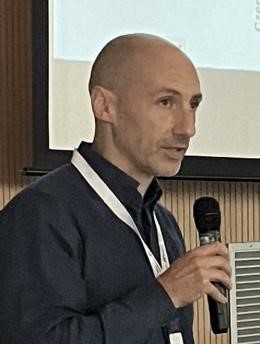
“Light Manipulation in Multilayered Photonic Structures”
Emiliano Descrovi
Politecnico di Torino and European Optical Society
Recent results on light manipulation by means of Bloch surface waves (BSW) on multilayers are presented. Planar multilayers sustaining either TE or TM-polarized BSW offer new opportunities for light management at the micro and nanoscale. BSWs can be considered as the dielectric equivalent of Surface Plasmon for metals. Compared to SPPs, BSWs present some advantages, such as lower absorption, narrower mode resonances, stronger near-field surface enhancement effects, longer propagation length, spectral and polarization tunability. In this talk, I will show how light can be confined and propagated by means of BSW coupling, in a 2D optics fashion, wherein light is flowing on an almost flat surface with weak perturbations. In addition, I will discuss how the presence of the high photonic LDOS associated to BSW can change the emission behavior of organic dipoles located on the multilayer surface. The concept of a BSW planar cavity is introduced and the corresponding effects on the spectral and temporal signature of emitters located therein will be discussed. In addition, chiral diffractive gratings will be demonstrated to provide an outcoupling mechanism for BSW resulting in free-space propagating beams carrying specific orbital angular momenta. The presented results have potential applications in the domain of engineered sources for telecommunications and quantum technologies.
Emiliano Descrovi is Associate Professor in Physics at the Department of Applied Science and Technology, Politecnico di Torino, Italy. He obtained his master degree in Physics from the University of Torino in 1999 and the PhD in Microtechnique from the Université de Neuchatel, Switzerland, in 2005. His research interests fall in the domain of dielectric nanophotonics and light-responsive polymer photonics, targeting novel tunable devices controlled by light. In the past years, he focused on optical phenomena involving surface modes on planar dielectric multilayers. In 2020 he joined the European Optical Society (EOS) board and presently serves as President since September 2024.

“Future Perspectives of Optical Fiber Sensors”
Orlando Frazão
Institute for Systems and Computer Engineering, Technology and Science
Optical fiber sensors (OFS) still play a crucial role due to their unique advantages. They are immune to electromagnetic interference, making them ideal for applications in aerospace, power grids, and medical fields. Additionally, they enable long-distance remote sensing and are widely used in structural health monitoring for bridges and pipelines. Their high precision and sensitivity allow for the detection of small variations in temperature, pressure, and strain, while their resistance to extreme environments makes them essential in nuclear plants, deep-sea exploration, and space missions. They are also lightweight and miniaturized, favoring biomedical and aerospace applications. However, they face challenges such as high costs, complex integration, and competition from wireless and IoT sensors. Despite this, they continue to dominate areas like structural monitoring, oil and gas, biomedicine, defense, and aerospace. Therefore, optical fiber sensors remain relevant, especially where precision, durability, and remote sensing are indispensable, with their future depending on cost reduction and integration with smart sensor networks.
Orlando Frazão is a Senior Researcher at INESC TEC, Portugal. He obtained his PhD in Physics from the University of Porto in 1999. His research interest lies in the fields of optical fiber sensors and optical telecommunications. He has received three awards. Orlando Frazão has published more than 500 papers in peer-reviewed scientific journals and international conferences and is the author of 7 patents. He is also a Senior Member of SPIE and an EOS Fellow.

“Applications of Gallium Oxide-Based Photomemristors in Neuromorphic Engineering”
Marina Sparvoli
Universidade de São Paulo
Gallium oxide (Ga2O3) is an emerging wide bandgap semiconductor material that has garnered significant attention in the field of high-voltage and high-frequency power electronics. Five main crystalline phases of Ga2O3 have been identified, including the corundum (𝛼), monoclinic (𝛽), defect spinel (𝛾), cubic (𝛿), and orthorhombic (ɛ) phases. Their thermodynamic stability follows the order of 𝛾, 𝛿, 𝛼, ɛ, and 𝛽. Notably, the monoclinic 𝛽-Ga2O3 phase is the most stable, particularly at high temperatures, while the other phases are metastable above room temperature and tend to transform into the 𝛽 phase under specific thermal conditions. In this study, thin films were deposited using the RF sputtering technique at three different power levels: 200, 300, and 400 W. The films were deposited onto p-type silicon substrates over a process duration of 30 minutes. For analysis, Rutherford Backscattering (RBS) techniques, scanning electron microscopy (SEM), and X-ray diffraction (XRD) were employed, confirming the 𝛽 phase. Through UV-Vis spectroscopy, the reflectance of the material was obtained, enabling the calculation of the bandgap. After depositing metallic contacts, the IxV curve was obtained to study the material non-linear behavior and light response. The three devices were subjected to electrical characterization in order to obtain key parameters such as SET and RESET voltages. It was observed that the photomemristors exhibited threshold switching behavior and photoelectric response. The devices were also evaluated in conjunction with an RC circuit, which emulates the dynamics of the neuronal membrane.
Marina Sparvoli holds a Bachelor’s degree in Physics Teaching (2011) and a Bachelor’s degree in Physics (2005) from the University of São Paulo (USP), a Master’s degree in Electrical Engineering (2007), and a Ph.D. in Electrical Engineering (2011), both from USP. She completed a postdoctoral project in Electrical Engineering at the Polytechnic School (2012), working with infrared region sensors for aerosol detection. She was a faculty member in the Electrical Engineering, Information Systems, and Computer Science programs at UNIP (2013). She also taught in the Computer Science program at the Federal University of ABC (2015). She conducted postdoctoral research on resistive memories in the Computer Science department at the Federal University of ABC (2019). In 2021, she was a faculty member in the Instrumentation, Automation, and Robotics Engineering program at the Federal University of ABC. She completed a postdoctoral position at the Institute of Physics at USP, specializing in thin films. She is currently a professor in the Instrumentation, Automation, and Robotics Engineering program at the Federal University of ABC. Her research expertise is in Electrical Engineering, with an emphasis on Semiconductor Materials and Components, focusing primarily on the following topics: oxides and nitrides, photoelectric sensors, dip coating, memristors, and graphene.

“Ultrafast structural dynamics in solids driven by femtosecond laser pulses: from nonthermal bond breaking to surface nanostructuring”
Martin E. Garcia
University of Kassel
When solids are exposed to ultrashort, intense laser pulses, they are driven into an extreme nonequilibrium state: the electronic system is heated within femtoseconds to temperatures of tens of thousands of Kelvin—far exceeding the surface temperature of the Sun—while the ionic lattice remains initially cold and undisturbed. In this short-lived, transient regime, the hot electrons dramatically alter the interatomic bonding landscape, exerting strong forces on the ions. These forces can trigger ultrafast structural phase transitions that are inaccessible under thermodynamic equilibrium conditions. Such «nonthermal» phenomena can be effectively described using approaches based on Density Functional Theory (DFT).
However, DFT simulations are inherently limited to small systems (typically fewer than ~1000 atoms) and are not yet capable of fully capturing the energy exchange between electrons and ions.
Almost simultaneously with the bond modification, the sudden increase in electronic temperature enhances electron-phonon coupling, leading to stronger electron-ion collisions. These collisions initiate a flow of energy from the electronic system into the lattice, culminating in a thermalized state within a few picoseconds. At this point, both subsystems reach a common elevated temperature, giving rise to “thermal” structural responses such as melting, ablation, dislocation formation, and nanocrystallization. Both the energy exchange- and the “thermal” processes are well captured by two-temperature model molecular dynamics (TTM-MD) simulations, which, based on classical interatomic potentials, enable the study of systems containing hundreds of millions of atoms. However, such models cannot account for the initial laser-induced bond changes and associated nonthermal transformations.
In this talk, we will review the current theoretical frameworks for describing both “nonthermal” and “thermal” laser-induced phenomena and present recent efforts toward a unified description that bridges the gap between electronic excitation and large-scale material response. Particular emphasis will be placed on the role of machine learning–based interatomic potentials—especially neural network potentials—which, when properly trained on DFT data, provide a powerful route to scale quantum-accurate descriptions to previously inaccessible time and length scales.
Martin Garcia is Professor of Theoretical Physics and Director of the Institute of Physics at the University of Kassel, Germany. He studied physics at the Instituto Balseiro in Bariloche, Argentina, and earned his PhD in Physics from the Freie Universität Berlin in 1992. Following postdoctoral appointments in the USA and Spain, he completed his Habilitation in Berlin. His research interests cover different areas of Solid-State Theory, Ultrafast Phenomena and Biophysics.

“Physical principles of optical interferometry for surface topography measurement”
Peter de Groot
Zygo Corporation and SPIE
The story of modern surface-measuring interferometry is a remarkable journey through the history of optics, beginning with the discovery of interference fringes and leading up to present-day methods. Today, laser interferometers and white-light interference microscopes are benchmark tools for high-precision measurements of form and roughness for everything from optical components with sub-nanometer tolerances to highly structured, additively manufactured parts. While basic concepts begin with a Michelson interferometer for perfectly flat and smooth mirrors, the topic becomes more complicated and interesting with real, three-dimensional (3D) surface structures. These surfaces diffract light over a range of angles, encoding topography information in a complex scattered light field. This light is then collected and imaged onto a camera, which inevitably filters the scattered light, leading to variations in response depending on spatial frequency. Furthermore, even for low spatial frequencies, data processing that converts measured light intensities to height data can suffer from measurement nonlinearities and uncertainty, particularly with parts that have semi-transparent coatings or variations in material composition over the measured area.
In our research at Zygo, in collaboration with international partners, we are building a better understanding of the fundamental metrological characteristics of topography-measuring interferometers. A suite of modeling techniques tackles these issues, from conventional or “elementary” Fourier optics to full 3D transfer functions and methods for solving the inverse problem for complex surface structures. Key aspects of our work include the translation of complex physics concepts into new capabilities, as well as meaningful, easily understood specifications and guidance for optimizing instrument setup for specific measurement tasks. Tools include open-source software models as well as engagement with international standards organizations such as ISO, for consistency and confidence in the use of interferometers for areal surface topography measurement.
Peter de Groot, PhD, is fascinated by optics and its practical use for measuring things. Educated first in History then in experimental atomic Physics at the Universities of Grenoble, Maine, and Connecticut, he enjoys discovering the hidden links between academic and applied research that fuel inventions and creative solutions in science and industry. Dr. de Groot joined Zygo in 1992, and has been Executive Director of Research, Chief Scientist, and now Scientist Emeritus for the company. His work has led to 141 US patents for optical instruments and 225 technical papers and book chapters. He is a Fellow of Optica and the Institute of Physics, and is the 2025 President of SPIE, the international Society for Optics and Photonics. His research interests include optical instrument theory and design, dimensional metrology, interferometry, and quantum methods of sensing and computing. An experienced educator, Dr. de Groot has taught secondary school science in West Africa, advanced topics at universities in the USA and the UK, and professional development courses worldwide.

“Some contributions to improving atmospheric observations through solar spectral analysis”
Erna Frins
Universidad de la República de Uruguay
The Earth’s atmosphere is a physical system strongly affected by human activity at local, regional, and global scales. One example of this is the rise in global temperature, which, among other things, increases the incidence of wildfires. These fires burn a large volume of biomass, altering the chemical composition of the atmosphere and increasing the amount of particulate matter, specifically fine aerosols.
Solar radiation, in addition to inducing chemical reactions during the day, is an excellent tool for studying the atmosphere, quantifying gaseous emissions from industrial plants, and observing local changes due to biomass burning, even if it occurs kilometres away.
Here we present different approaches to improving the detection and quantification of trace gases resulting from the combustion of fossil fuel (e.g., Nitrogen oxides, Sulphur oxides, and Carbonyls), and the quantification of gas fluxes using differential optical absorption spectroscopy (DOAS). We also present some results on atmospheric aerosols originated from biomass burning, resulting from ground-based aerosol monitoring in Montevideo through AERONET (Aerosol Robotic Network, NASA).
Erna Frins is Professor of Physics at the Physics Institute of the Engineering School, Universidad de la República, Uruguay. Dipl.-Phys. (1992) from the TU-Berlin and a PhD in physics (1998) from the Wolfgang Goethe-University, Germany. Frins is laureate of the National UNESCO – L’OREAL Award for Women in Science in 2012. Between 2007 and 2011, she was president of the Uruguayan Physical Society and is now chair of the National Scientific Committee for Antarctic Research in Uruguay. Since 2023, she has been a member of the physics science jury for the Falling Walls Prize. She leads a research group in pure and applied optics. Her research is focused on developing optical methods for atmospheric remote sensing. She joined the Aerosol Robotic Network – AERONET, NASA, Project in 2019.

“Uncovering Science: Communicating Research to Everyone”
Mike McKee
University of Central Florida
The last time you told someone outside your field your topic of research, did you get a strange look, a nodding glance, or a pause before a new topic was discussed? Communicating difficult scientific topics in a way that a person can understand is important to engage more in the practice of science and attract more students into the field. Rather than “dumbing down” your explanation, speaking simply can help those who are not just young, but also in other fields who may be experts in their own right, but lack the deep understanding of your research.
This talk will present some fun “take-away” techniques you can use immediately, to help you explain your research or scientific concepts and avoid those awkward stares
Mike McKee is currently the associate director for the Bachelor of Science in Photonic Science (BSPSE) and Engineering at CREOL, The College of Optics and Photonics a position he has held since 2013 and is a joint program between the College of Engineering and Computer Science and the College of Optics and Photonics. For nearly twenty years prior to this, he was a high school physics teacher, science instructional coach, and conducted workshops for teachers and students alike. He also was the co-director for the Science Olympiad National Tournament, hosted at the University of Central Florida in 2012 and in 2014. This event required massive coordination of all the activities for the science activities that included hosting about 7000 people, opening and closing ceremonies, and other program details. From 1999 to 2018, he was the state director for the Florida Science Olympiad, coordinating activities at seven regional competitions, a state competition at UCF, and the involvement of 200 schools across the state of Florida.

“Triangulation at the Standard Quantum Limit”
John Howell
Chapman University
The laws and principles of triangulation have been known for millennia with known uses by the Egyptians and Greeks. From star tracking, to surveying, to navigation, to robotics, its applications are pervasive in our modern society. However, for the most part, its limitations have been primarily technical. In this presentation, I will describe our theoretical and now experimentally the fundamental limits of triangulation with the intent of vastly enhancing its precision. We derived the Cramer Rao bound for a Poisson point source measured in the back focal plane of a lens. We then measured the depth of the source with nanometer-scale precision at 1.4 meters away using two balanced detectors. This is four to five orders of magnitude better than other passive depth estimation systems. I will discuss the methods allowing us to achieve these results and some applications.
Professor Howell started his career at the University of Rochester and eventually led the Center for Coherence and Quantum Optics as both a professor of physics and optics. He moved to Jerusalem in 2017 where he joined the Racah Institute as a professor of physics. In 2022, he joined the faculty at Chapman University in Southern California as a part of the Institute for Quantum Studies. His work embraces many fields of classical and quantum optics. He has received several awards and is a fellow at Optica. He is currently serving as the Past President of the ICO.